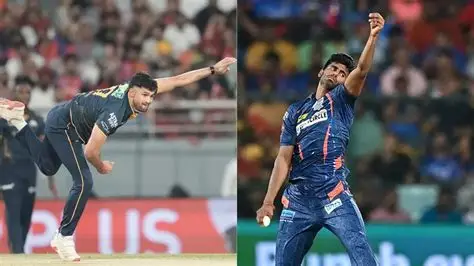
India’s fast-bowling cupboard is looking healthier than it has in a while, and stand-in bowling coach Sunil Joshi couldn’t hide his excitement about it. Ahead of the second T20I against Zimbabwe in Harare, Joshi singled out Mayank Yadav and Ashok Sharma as exciting new additions to the pace attack, pointing out that having options like these will be crucial as India juggles a jam-packed international schedule.
Joshi, who has stepped in as bowling coach for this Zimbabwe series while Morne Morkel is away, didn’t hold back his appreciation for the two quicks after watching them perform in the series opener.
“It’s very pleasing because he (Mayank) has come back very strong after injury. His rhythm has been very good. Ashok… we have seen how he is effective in Sri Lanka during the India A tour,” Joshi said during the pre-match press conference. “He got the opportunity for that. It’s a good thing for the Indian fast bowling pool that we have so many fast bowlers. We just have to prepare them as opportunities can come at any time.”
Why India Needs More Fast Bowling Options
For a while now, India’s pace attack has leaned heavily on the tried-and-tested duo of Jasprit Bumrah and Mohammed Siraj. Both are workhorses across all three formats, but that’s exactly the problem — you can only push frontline bowlers so hard before workload management becomes a genuine concern rather than a buzzword.
This is precisely why the team management has made building a deeper reserve of quick bowlers a priority. It’s not just about having backup options; it’s about having bowlers who can walk in and perform at the highest level whenever called upon, without India feeling the drop-off.
Mayank Yadav and Ashok Sharma fit that bill perfectly right now. Both have earned their stripes in different settings before getting their shot with the senior team, and their emergence gives the selectors more flexibility to rotate the pace attack across formats without compromising on quality.
Ashok Sharma’s Rapid Rise
Ashok Sharma’s India debut came in the series opener in Harare, and it capped off a breakout season that saw him turn heads with Gujarat Titans in the IPL. What set him apart during the tournament was his sheer pace — he was consistently among the quickest bowlers around, and he even clocked one of the fastest deliveries of the entire IPL season during a match against Rajasthan Royals at the Narendra Modi Stadium in Ahmedabad.
That kind of raw speed doesn’t go unnoticed, and it clearly played a part in fast-tracking his call-up to the national side.
Mayank Yadav’s Comeback Story
Mayank Yadav’s return to the Indian setup is arguably the more heartening story of the two. After nearly two years out of the picture — a stretch plagued by injuries that kept him sidelined for large chunks of the last two IPL seasons — pulling on the India jersey again marks a significant milestone in his comeback.
What’s encouraging is that Mayank isn’t just relying on raw pace anymore. He’s clearly worked on the smarter aspects of his bowling too — reading conditions better, adjusting his lengths, and tailoring his plans to the batter in front of him rather than banging the ball in as fast as possible every single time.
That maturity showed up in the first T20I, where he ripped through Zimbabwe’s top order with the new ball, giving India firm control of the game inside the Powerplay itself.
Ashok, on the other hand, had a slightly shaky start with a few boundaries leaking early on and again at the death, but he found his rhythm through the middle overs, hitting hard lengths consistently and troubling the Zimbabwean batters with pure pace.
What’s Next for India’s Pace Attack
With the series already tilted in India’s favour, both youngsters will be keen to back up their promising debuts when the two sides clash again in the second T20I. Another impressive outing wouldn’t just help India wrap up the series in Harare — it would also go a long way in cementing their spots as genuine long-term prospects in India’s fast-bowling plans.
And for the team management, that’s really the biggest takeaway from this series so far: a fresh crop of pacers who are ready, willing, and able to step up the moment their number is called.
Also Read: